Building a BRAND with SWAG

I found an intriguing article written exactly one year ago today. To mark the anniversary of Elise L. Connors’ article, I need to examine my writing style by engaging in an introspective search of my own branding. As an aspiring author, I am constantly writing with passion. Writing is an obsession, an ambition, an aspiration, and is the essence of my being and my survival.


As such, I have been writing without worrying about branding or doing it with swag. I am borrowing these words, brand and swag, from Connors in the context that she used them in her article. I confess that I never paid attention to brand and swag in terms of writing.

It is now time to excogitate. Assuming that I do have that BRAND and that I built it with SWAG, what would the package look like exactly? I presume that after I have built my brand, I would like to maintain it for the duration of my “new-found” career. Branding oneself is a long-term goal and process and relies on audience perception. I do not know if I have an audience yet, considering that my Kickstarter project did not start; pun intended shamelessly.

I will now attempt to examine the acronym Connors created in order to gauge my progress in the branding-with-swag endeavor. She states that “Success as an author depends not only on writing a quality book (which is VERY important) but also how you are able to connect with your audience.”

As Connor’s defines it, brand is more than my name. It is my identity. It is how the general or reading public views me. BRAND stands for:

B oldness (You have to be able to say things others are afraid to.)

R elevance (Are you talking about the things your audience wants to hear about?)

A nd

N otable (Are you saying things that are “newsworthy”?)

D edication (Are you dedicated to yourself and your audience?)”

What is SWAG? This isn’t the swag that normally comes to mind. This is SWAG:

S ophisticated (Are you offering high-quality content? Big tip: proofreading is important.)

W orthy (Are you doing anything to deserve the notoriety you’re seeking?)

A nd

G rateful (Are you appreciative for your audience?)”

Taking the first word and dissecting it, I would say that I definitely am bold. I do not flinch from situations, and I say it like it is, which tends to contradict with the expectations of people. I try to make my postings relevant, always looking at the grand picture, always seeing how my postings will benefit people, and trying to find out what readers want. It is difficult to please every preference, but my aim is to try.

I will help Elise L. Connors a little by changing the word, “And, to Accessible. In acknowledgement of that substitution, I make my postings accessible by linking my blogs and other literary efforts to social media and other viable avenues.  

If you visit my Yahoo! Voices postings, you will discover articles about people who are making strides in their different fields. In that sense, these are notable people and notable topics, newsworthy people and newsworthy topics.

The final component of BRAND is dedication. I am a loyal, committed, and dye-in-the-wool kind of person. I thrived in education for decades, have stayed in the same volunteer capacities for decades, and I am unswerving in my devotion to my writing and my love of it, which has lasted almost four decades. It is that love of writing that gripped me at an early age, caused me to obtain two degrees in it, and I am poised to obtain a third one.

For the next acronym, SWAG, I want to believe that by virtue of having a Master of Arts degree in journalism and by being an editor, a freelancer, a book reviewer, and a copy writer–among other attributes, that my content is sophisticated in quality.

Anything we put out in cyberspace or publish brings with it the positive and the negative. The question is, “Are you doing anything to deserve the notoriety you’re seeking?” Notoriety carries both a negative connotation and a negative denotation. I want to see my glass as half full and take the good that exposure brings to me. I hope that I am worthy of fame and should deserve it when it arrives by dint of my hardwork.

Again, I am going to substitute the word, “And,” with another adjective that begins with “A.” That word is “Adventurous.” Am I allowing myself the courage to explore my creativity and take it as far as audacity will allow? Although several colleagues have recognized creativity in my intellectual products, I hope to grow in my ability to drizzle morsels of words with different tasty confetti that will entice all to partake in and savor the cornucopia of literary offerings that I craft.

The last word on the list is grateful(ness). I want to believe that I am appreciative of my audience. As I check my readership, I find it increasing daily, weekly, and cumulatively. I am eternally grateful to all who have stopped by and all who will visit. Please leave a mark of your presence by putting down comments so that I can express my gratitude formally.

I want to thank Elise L. Connors for providing the foundation for today’s posting, and I hope to Pay It Forward by returning the same type of favor to several people. As my friend and critic, Cynthia Adams, said, “Frances Ohanenye is a writer with a finger on the pulse of creativity.” I could not have said it better myself. Thank you, Cynthia, for always being my sounding board.

Exploring Genrelific® Situations

Words come to me out of the blue as inventions. For example, I used the word “fantabulous,” for the first time to my students in 1997 without realizing that someone else had documented its use in 1957. I invent words continuously and use them personally–blended words, unique words, and so on, but I never venture to clamor for the general public to herald their birth until now.

This morning, as I brewed my herbal tea and pondered over the topic for today’s blog, I sought to take stock of my versatility in the literary realm. I am a writer of many genres, meaning that I am prolific in those genres. In search of the ONE word that would capture my uniqueness and brand me at the same time, I (Frances Ohanenye) invented “genrelific” on February 7, 2012.

I went to the Lexico Publishing Company and to Merriam-Webster to find out how I can add my newly coined word into their respective dictionaries. In summation, usage is the passport for inclusion into that privileged class. Therefore, I encourage everyone to begin to use the word “genrelific.” The more people who use it, the higher the chance of my word being included in any dictionary. I searched the internet, and it does not exist.

For example, you could say, “My friend, Frances Ohanenye, is very genrelific. She writes across many genres.” Or, “My brother is a genrelific reader and does not restrict himself to one genre.”

I admit that my motive may seem self-serving for now, but ultimately, my goal is for the general reading public to describe writers who cross the boundaries of the literary world with one word instead of with a string of wordy morsels. “Genrelific” captures the literati, that group of authors, writers, and other people involved with literature and the arts.

I am realistic and patient. The process of inclusion takes weeks, months, and even years. I understand. I am not myopic at all either. I see the far-reaching use of the word, genrelific. We speak of types of art, movies/cinematography, music, and wherever categories and sub-categories exist within an industry. The applicability of the word is limitless.

To establish ownership of my coined word for evidentiary purpose, I took the liberty of corresponding with those two companies to queue myself on their waiting list and introduce my brainchild as well. Now, let us get back to my “genrelific” self. I am prolific in these genres: children’s, young adult (YA), mystery, science fiction, short story, poetry, religious/inspirational, and adult/realistic/women’s. I want to delve into creating plays/drama, mythology, romance, fairytale, historical fiction, folktale–which my father used to tell us a lot of, and others.

Kathleen Hall Jamieson‘s “Antecedent Genre as Rhetorical Constraint” declares that rhetorical situation determines discourse as well as antecedent genres. I admire Jamieson’s succinctness because past definitions of genres still control our present analysis, appreciation, and emulation. “Antecedent genres are genres of the past used as a basis to shape and form current rhetorical responses.”

I have penned at least one volume in each of the nine genres listed above, and some genres can boast of at least eight creations in my literary repertoire. I have many ideas marinating for many more explorations within each of the types of literature in which I have traveled.

That I have not dabbled into the romance genre purely as a writer is not for lack of desire; no pun intended. The muse has not called me yet. To be a writer, one must first be a reader. I devoured at least 100 of Barbara Cartland’s romance novels and by other authors, enough to inspire me despite myself.

I consumed at least 70 of René Brabazon Lodge Alan Raymond’s, (famously and lovingly known as James Hadley Chase) crime fiction novels, not to mention many from Agatha Christie, Sherlock Holmes, Ian Fleming (the creator of James Bond), and several more.

I read and memorized texts of classic novels (Charles Dickens, Jonathan Swift, Robert Louis Stevenson, Jane Austen, Horatio Alger, Charlotte Bronte, Guy de Maupassant, Nathaniel Hawthorne, David Henry Thoreau) and William Shakespeare’s dramas, the springboard for my rapture with literature.

I nourished my soul with Chinua Achebe, Wole Soyinka, Hilaire Belloc, Kofi Awoonor, and other poignant authors and poets. As a matter of fact, one year, I read at least 180 novels, not teacher-mandated readings, required texts, or textbooks, simply self-chosen glorious novels.

Now I write furiously. I write many genres and can write all genres. However, my creation relies on inspiration cascading like confetti rather than by a self-inflicted time-table. Who knows, when the inspiration floods my brain for romance novels, I will create that genre as a full bloom or any other genre my mind chooses to birth.

The type of literature into which I will never seek membership is horror. The simple reason is that I do not wish to stain or sell my soul because I may not be able to buy it back or get it back from the dark forces that inhabit that sphere. Superstitious? May be, but I have read both Steven King and Edgar Allan Poe, and they both scared the living daylights out of me and my house.

Venturing into many genres allows me to dabble into unrestricted spheres. I perceive myself as a living testimony of Richard Coe’s words when he said that “tyranny of genre” constrains individual creativity (Coe 188). Therefore, I allow myself to mingle within genres, cross their boundaries, shake hands with their inhabitants, and dine luxuriously among them.

In my mystery novels, romance abounds. In one YA novel, religion trumpets out of the mouths of youths like the Sermon on the Mount, and religious-infused allusions thrive. In my science fiction short story, realism and fiction fight for supremacy, but because I want it classified as a science fiction endeavor, that genre triumphs. As Amy Devitt states, “A genre is named because of its formal markers” (Devitt 10), and I wanted that story formally marked as a science fiction.

If I have failed to make it known before, unique words feed my brain like food and my brain feeds me unique words. Today will go down in famousness as the birthday of the word, “genrelific,” another synergy for the literary world.

©2012Genrelific by FrancesOhanenye

Response to Literature: A Recipe

Link to image: http://sixminutes.dlugan.com/favicon.ico

sixminutes.dlugan.com

Following the K.I.S.S. (Keep It Simple, Sweetheart) principle, here is the simplest recipe you need to follow when responding to any piece of literature (regardless of age or academic level). Blessed with so many nicknames (book review, literary criticism, literary critical analysis, response to literature, analytical review, literary interpretation, and so on), there is, indeed, a worthwhile dissimilarity among all the aforementioned explorations, from the simplest (book review) to the most complex (literary critical analysis). Regardless of your preference for moniker, your job is to help a potential reader to get a glimpse into a piece of literary work before he/she decides to read it. You are the reviewer.

  • Needless to say, before you engage in response to literature, you must read that novel to the end of it.
  • Break your critique into three major parts: introduction, body, and conclusion.
  • Pull the audience in with gripping sentences in the introduction.
  •  Summarize the story within the first few paragraphs with beginning, middle, and ending; however, you should mesh the summary into your analysis (preferable).
  • From your notes (taken during the reading), identify any interesting situation that caused very strong reactions in you: What inspired you? Confused you? Surprised you?
  • Include and organize these reactions; discuss each major thought in each paragraph in the body of your review and link them to the events in the order they occur in the story.
  • Give insight and make judgment so the reader can determine your feeling about the story: like it, don’t like it, or lukewarm. Support each opinion.
  • Identify elements of literature and comment on them in your writing as they pertain to the story.
  • Identify those figurative expressions the author used in the story; comment on his/her style, ingenuity, creative playfulness, and such, as they pertain to the story.
  • Allow your voice to come through clearly; showcase your style.
  • Employ the six traits of writing: ideas, organization, voice, word choice, sentence fluency, and conventions.
  • Paint colorfully vivid pictures with figures of speech, action verbs, and descriptive adjectives.
  • Quote the author’s most salient and moving phrases/words.
  • Place a check beside the bulleted requirements above as you complete each one.
  • Edit and revise your work with the proofreading/copy-editing guidelines.
  • Pre-grade your work physically; before submitting it to an instructor or for publication, repair any defects that might impact negatively your grade or your reputation.

I look forward to reading your literary criticism, and criticism can be constructive. Thanks for stopping by today.

Nikki Giovanni Asks for a Major Motion Picture for MLK, Junior

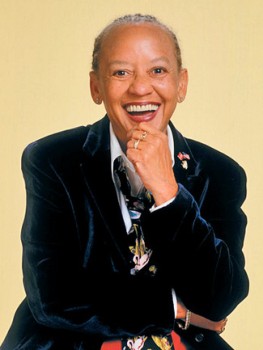
As Kennesaw State University joins the rest of the nation to mark another deserved birthday celebration for Dr. Martin Luther King, Junior, it welcomed the world-renowned poet, Nikki Giovanni, as its keynote speaker. In her inaugural visit to KSU, Giovanni posed a question worthy of deep consideration.

“Why has there not been a major motion picture in honor of Dr. Martin Luther King, Jr.? Hollywood has made movies about drug dealers and criminals, Capone, Dillinger, and so on. You have to wonder why Martin has no movie in his honor,” the bold and critically acclaimed Giovanni demanded during the 2012 annual observance on Monday, January 16.

Forty-four years after his assassination, Martin Luther King, Jr., is yet to earn a big-screen, sole-title movie right as Malcolm X and numerous other black history makers and heavyweights.

In an unpredictable mixture of history lecture, entertainment, chastisement, and religious sermon, Giovanni kept up a stream of surprising influx that kept attendees laughing hilariously and continually. Without warning, she sent them bristling from her criticisms and feeling grateful for uncountable legacies at the same time.

A distinguished professor of English at Virginia Polytechnic Institute and State University-Virginia Tech–since 1987, Giovanni sneaked in another title to numerous others (mother, writer, poet, commentator, and activist), that of a comedienne, as she caused riotous laughter to erupt smoothly and repeatedly.

The “Princess of Black Poetry” recanted childhood stories of her grandmother’s link to Civil Rights legends such as Rosa Parks, E.D. Nixon (who bailed Parks out of jail), and MLK, Jr. She reminded us of a very painful fact: “We lost Martin too early. He was just 39.” Ironically, Giovanni’s writing career was born in the year of Martin Luther King’s assassination.

Giovanni recited a very moving tribute to “the incomparable Martin” from her poetry collection, Acolyte.

In the Spirit of Martin,” demanded “the world to see what they did to my boy.” It traveled through civil rights cities and envisioned a present-day Martin, “the voice of his people,” wearing a tattoo and with braided hair.

One of Oprah Winfrey’s twenty-five “Living Legends,” Giovanni uplifted the mixed-race audience by urging Caucasian female writers and historians to tell the story of the frontier woman whose courage in the face of insurmountable danger has not begun to be told yet.

Georgia’s third largest university, Kennesaw State honored the woman who came to honor Martin Luther King, Jr., with a medley of orchestrated events such as songs by the KSU Gospel Choir, a rendition of the “Black National Anthem,” and remarks by President Daniel S. Papp.

The Sensory Self of Discovery

All who create things hope for discovery, whether they are musicians, sculptors, writers, or singers. The essential question is, what does it look like? Which one is better: self-publishing self-discovery or being unearthed by traditional publishing? Which one carries a lesser burden?

We hope to recognize it when it comes, if it is truly true, but some discoveries wear cloaks of deception, as many authors can attest. Regardless, we all want it and hope that it is truly honest when it arrives to carry us away in a romantic carriage of success.

What used to be the yardstick established by traditional publishing houses is no longer the norm: millions of book sales and bulging bank account with the illusive money from an advance of potential earnings, the key word being potential.

It is always intrinsically rewarding when a publisher recognizes a talented writer and trusts, on a hunch, the lilting words of potential sales so much so that a huge advance is proffered in hopes that the novel will deliver. The borrowed or loaned money equates credit, but the writer, as worried as he is about the huge debt hanging precariously above, wills the book to deliver, even as he or she squanders the money anyway.

Conversely, in the current exhilarating circumstances introduced by self-publishing and e-book sales, talent identification of self is sweeter when the writer gets to keep all or most of the rewards of his creation and labor. There is no advance payment looming over the head of the writer who discovers himself or herself. Yes, discovery is internal and is even more uplifting. After Amazon (or the e-book-reader maker) takes its hefty cut, the remaining amount belongs to the author entirely.

However, talent recognition by thousands, nay, millions of adoring fans, is also even more vindicating because these readers are garnered by the writer directly. Anyone who has not been living under a rock for the past couple of years has heard and seen the ubiquitous news about self-published e-books taking the industry by storm. Statistics abound prolifically.

What discovery is not:

According to Deirdre Donahue of USA Today, “…When 25 publishers passed on buying his thriller Riptide, Michael Prescott thought his career was dead…” Being passed off sounds like the end of the publishing road, but as any persevering writer will attest, someone has to believe in a writer’s work, eventually, if the writer is waiting on traditional publishing houses. Time, acceptance, and several factors are the foe.

What does it look like?

Whether it is through royalty-paying, traditional publishers or through self-publishing, the point is that all authors should be able to make money on their work without having to jump through all sorts of hoops imposed by the system, so says J.A. Konrath, who is considered the guru of the self-publishing movement.

“I am a guy who had his butt kicked by the (traditional-publishing) industry for 20 years, and now I’m showing other authors what they can do so they don’t have to go through the same thing,” he continues. “Traditional book publishers are just serving drinks on the Titanic. It’s a huge win for readers, who now have easier access to more writers from around the world,” he adds.

Discovery looks like peaks in sales on a graph, a peak that keeps rising and rising until it goes off the chart regardless of the platform used to monitor the exchange of book for money. Peaks in sales are born by authorpreneurs who have used the ever permissible and pervasive outlets to pitch their novels like Brittany Geragotelis who used Wattpad to propel herself to stardom with over one million followers.

According to the Association of American Publishers, e-books grew from 0.6% of the total trade market share in 2008 to 6.4% in 2010, the most recent figures available. Total net revenue for 2010 was $878 million with 114 million e-books sold. In adult fiction, e-books are now 13.6% of the market.

What does it sound like?

In this revolutionary period of unraveling breakneck technological advances in the book-making and book-reading industries, discovery sounds like pages turning maddeningly fast by an avid reader who cannot put the book or the e-reading device down. It sounds like the adamant voice of a devoted follower demanding when the next book will be out after devouring the maiden novel of an inventive writer. This is an encouragement for the author to get back to work fast and continue cooking and concocting while the embers are still red and flaming.

What does it smell like?

It smells like crisp and newly minted dollar bills earned by newly printed pages (or not, if it is uploaded into an e-reader). According to the USA Today article cited above, author Michael Prescott says he earned more than $300,000 before taxes last year (2011) by selling more than 800,000 copies of his self-published e-books.

Konrath has seen his income from his self-published e-book sales go from $1,400 in April 2009 to $68,000 in April 2011.

These two authors might be the tip of the success iceberg, but imagine both for yourself, freshly minted money and freshly printed pages vying for a smelling contest. That I should be so lucky to smell both!

What does it feel like?

Discovery feels like touching the soft and fluffy clouds in the sky, the summit. Getting that nod feels like the coolest, smoothest 100% silk, like satin, and 800 percale thread count, the most luxurious sensation a person could ever touch. It is that much peaceful and calming—reaching that elevation of success, self-measured or not. It is sensational, the key word being sense (of self, that is).

What does discovery taste like?

It tastes like food on the table. Quoting the quotable Konrath,Any writer who puts food on the table with their writing is successful. It doesn’t matter if it is a box of Mac and Cheese, or caviar and champagne. Taking your career into your own hands, giving it your best shot, striving to do better… that’s the American Dream, baby.”

Konrath is especially thrilled for the thousands and thousands of authors who are now making ends meet because they achieved their goals and self-published their e-books. “Your ebooks will continue to earn money, forever. Be proud. You are a success,” he encourages.

“It’s a gold rush out there,” Prescott joins the chorus of e-book songs of praise. “Forty acres and a mule. It’s the best time for an independent writer to get out there. It’s a whole new world. You’re eliminating the middleman.”

Is It a Woman’s Work of Words?

Everyone around me knows how much I love Michael, Prince, and Maxwell in that order, but it is Maxwell’s lyrics that are most appropriate for this blog entry. The question now is whether the writing world is a woman’s work.

“Pray God you can cope
I’ll stand outside
This woman’s work
This woman’s worth
Ooh, it’s hard on the man
Now his part is over
Now starts the craft… of the father…”

Several parts of the lyrics lend themselves to today’s Georgia Writer’s Association’s Red Clay Writers’ Conference. The theme was “Crafting,” which included “Below the Surface: The Craft of Fiction,” “Crafting the Poem and The Book Poetry and the Chapbook,” and the sale of different crafts.

There were more female presenters than male presenters during the conference, a coincidence or a planned action? Thus I proffer the questions, “Are there more female writers than male writers?” and “Do women epitomize literary prowess more than men?”

My instinctive response is that it depends on the genre not the gender. Then again, I might find myself eating my own words later. However, evidence shows more female writers of Young Adult and romance forms than their male counterpart.

For realistic fiction, I would say that it is still a male-dominated arena going back to hundreds of years ago when only men reigned supreme in the writing plateau. The science fiction genre is no different: more men seem to get their names out there.

What about the craft itself? Do men write better stories than woman? Here the opinions polarize themselves. Of course, we are dealing with opinions here. A visit to http://www.writingforums.org/ on the threading of this topic shows it unresolved. However, the current trend is that more publishers receive more manuscripts from new female writers than male writers.

Is this a numbers game where we count recently published men versus recently published women? Should we focus on submissions? What percentage of women who submit their works recently reach publication as opposed to the number of men whose manuscripts are accepted and published recently? Should we take genre into consideration when we respond to the questions?

Elizabeth A. Flynn in “Composing as a Woman” in College Composition and Communication 39 (December 1988), observed that women write more about caring and connection in their narratives, and men write more about adventure and separation. Several commentators on the Writing Forums site echo Flynn’s observation over two decades later.

Following that thought and providing an explanation to the reason, Katherine Haake, “Claiming Our Own Authority,” AWP Chronicle 2 of October/November 1989, pages 1 – 2, states, “When women tell the stories (of their experiences), we know the world differently; we demystify the original scene that has worked so well to silence us. We can then construct a place in which we can hold a wide diversity of scenes to be compatible, to coexist, to enhance and redefine each other.”

Mary Ann Cain in Revisioning Writers’ Talk: Gender and Culture in Acts of Composing (1995), adds that as women, “We can reconstruct the world as a place that both women and men safely inhabit” as opposed to men’s reconstruction where male writers put their characters through more hardships than women writers.

Is this a tolerance issue? Can women withstand and write about hardship as men do? Since action sells, the literary world perceives men in some quarters as better writers in that they can remove their emotions completely from their writing. Most women may seem unable to do just that yet.

Consider something else: There are more female literary agents than male literary agents? What does that say then? That women agents tend to pick and publish more male writers in the general fiction, science fiction, and thriller/crime fiction genres? Is there a conspiracy theory here?

What about readership? Everyone knows women are the readers across all genres. More women read more books, fiction or nonfiction, than men. With women dominating the reading world and more new females entering the literary world in droves, what does that augur for the future?

Is this the wave of things to come, future trends with women writers pervading all genres? Is it a woman’s work of words now or will it be a paradigm shift of impending female writer dominance?

As a writer, I inhabit the locales of multiple genres but have not sat myself down to tally what gender dominates what genre. I just know that I love to traverse across several types of literature and can write well, but I refuse to throw in gratuitous sex, violence, and such for the sake of trying to sound like a man or for the sake of using gore to make a buck.

Those who dismiss or underestimate the feminine artistry, lyrical prose, and fluid poetry intrinsic in the female art form do themselves the injustice of failing to appreciate and recognize gifts as profound as the deoxyribonucleic acid (DNA) that make women the exquisite gender they are.

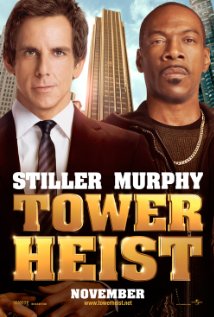
Eddie Murphy’s “Tower Heist” Shafted

Can a cinema house intentionally undermine the sale and performance of a movie? I will let you be the judge of that after I present what I saw, heard, and experienced tonight at the premier of Eddie’s “Tower Heist.”

After months of anticipation for this movie, I perfected my plans: chiropractic visit, laugh my head off during the movie (after all, it is Eddie), run back home to walk my dogs, have dinner, and spend the night regaling friends of the fantastic attributes of this most-expected movie.

Upon arrival at Movies 278 in Hiram, the ticketing agent informed me that I could not watch the movie at my preferred 5:15 P.M. time because Theater 4 was experiencing technical problems.

Immediately, I saw this veiled rouse as an attempt to sabotage Eddie Murphy’s movie. “Are you going to charge me the matinee price?” I asked with rightful expectation.

“No, ma’am. I can’t.”

Imagine my surprise! Without exchanging any additional words, I walked out, angered at the audacity of this movie theater in trying to cause this movie to flop.

The ticketing agent had the nerve to ask me to pay full price for a movie for which I clearly had intended to pay matinee price, a movie for which they have inconvenienced me and now want to rearrange all my plans for the entire evening. I also saw this as an attempt to make two quick bucks per customer.

I almost reached my car when another righteous indignation took a hold of me. I spun around, walked back into the theater, stewed in that annoyance while I waited my turn with the utmost self-control, and asked to see the manager when I arrived at the window.

Before I walked out, there was no further evidence of deception except the words that emanated out of the cahier’s lips. Now, the management went as far as covering the remaining three show times (5 O’clock, 7 P.M., and 10 O’clock) with handwritten “Sold Out!” signs that screamed at me and the other patrons. It must have become tired of telling people of the “experiencing-technical-problems-in-Theater-4” lie.

When the very young gentleman came to address my concerns, I stated that I was aware of his movie house’s attempt to shaft Eddie Murphy’s movie and cause it to fail. “Why is it that all the other movies in your theater have no problem except ‘Tower Heist’?” I demanded.

At which point he saw fit to explain, “We got bought out by Carmike and are switching to a digital system. We used to have reel-to-reel. We do not have a physical movie anymore. Otherwise, none of this would have happened.”

Not only was my anger incensed further by this pitiful lie, I was insulted by his presumption that the public would not make any fuss. Several thoughts flooded my mind in a question nature. Why did this management not plan ahead? What was so destructive about the machine in Theater Four that, by all intents and purposes, earlier shows had gone without a glitch (presumably) until we arrived at the 5:15 show? Suddenly, “Houston, we have a problem?”

Are there not some laws that this movie theater is breaking? Public deception, sabotage, falsification of information, a bold attempt to cover its own lies by stating that a movie is sold out when it is not, scheming to charge the public a full price rather than the matinee price, defrauding the producers and the entire cast and crew of their future earnings, and so on?

“I am disappointed with what your movie theater is doing,” I continued. “Look at all these people. They are leaving; they are getting upset, obviously. Like me, they had plans, and now your theater is changing those plans selfishly and with the hidden motive to make more money.”

I actually heard a couple say the same exact thing. “We came to see the 5:15 show. That ruins our plans for the entire evening.”

“I am sorry, ma’am, but I do not like what you are insinuating.”

“I am not insinuating. I am stating flat out that your movie theater is trying to mess up the premier of “Tower Heist. I came to watch the 5:15 show. You closed it down, but you want to charge me the full price when it was not my fault that you are experiencing ‘technical problems.’ The cashier wants to charge me a full fare. I will not pay it.

“Here is the $7 for the matinee price,” and I stretched out my hand with the correct amount it in. “That is what I am going to pay. It is the rightful course of action considering what your theater is doing.”

He paused for a second, which gave my long-winded self the chance to pounce.

“You have altered my plans for the entire evening. I had wanted to see the movie and run home to walk my dogs. Now, I have to run home, walk my dogs, and run back here, which clearly would be a waste of my time and gasoline, and I cannot eat my dinner until after the movie ends around 9 P.M., which goes against my weight-monitoring rules.

It usually takes me 30 minutes on a good day to get here. Now, with the merciless 5 O’clock traffic, it is going to take me twice that long.”

“I clearly understand your frustration. I would be upset as well. Tell you what. You can watch the movie on the house.”

This was an unexpected twist of events. I inquired how that would work. He asked me to wait for a minute, was gone for that long, and handed me a square slip of paper with “EMP $0.00” and Theater 11 stamped on it, among other relevant and irrelevant pieces of information.

Even though I watched the movie for free, I still believe that this movie theater intentionally meant to cause Eddie Murphy’s movie to flop. Whether it will fail due to poor sales remains to be seen. I also wondered if this same dubious tactic was practiced elsewhere by other movie theaters. Was there a hidden agenda here, a veiled attempt to cause this movie to fail by Movies 278 and other cinemas elsewhere?

The Federal Trade Commission, the Screen Actors Guild, the Department of justice, or whatever arm of the law oversees business practices that restrain trade for others need to turn its spotlight on this theater’s actions today, actions that must have broken several laws.

For a much publicized movie, there were no posters of the movie anywhere in that theater, not claiming its earned display outside with the other movies, nor inside in the lobby or on the walls, not one poster. Movies 278’s activities today stank of mischief, deception, and sabotage. “Tower Heist” has been robbed!

Education Knocks Down Those Who Knocked It Down

My father, a very cosmopolitan and wise man, gave all his children access to as much education as each could assimilate, regardless of the child’s gender, the cost of the education, or how far flung the location of that knowledge was.  And I, being a voracious reader, a sponge in an arid zone, and an eternal learner, an adventurer, could not get my fill of that well and wealth of knowledge; I still cannot.

I blazed through two degrees, and with bright eyes and a bushy tail, I sashayed back to Nigeria.  I remember when I came back to the United States, having left Nigeria with a shredded heart from a new marriage and a speedily defunct one at that, pregnant with our daughter, how bleak things looked, but I had an accommodation.  Thank goodness for the two wonderful people who helped me with that toothache of a problem.  I came back with one hundred dollars to my name (not wishing to declare anything to the U.S. Customs), plus a couple of hundred dollars that I had loaned to a friend who came to Nigeria to visit.  That was the extent of my wealth, and the friend was not paying back the debt quickly enough no matter how desperate I sounded or how much I tried to impress my needs upon him.

Getting back into the groove of things in Atlanta back then (after a three-year absence) was as impossible as trying to climb onto the back of a stubborn elephant that refused to lower itself.  It was like doing so with the shortest ladder.  I complained to my father about the prejudice, about not being given a chance once Americans heard the accent, and about every excuse I could muster.  His unwavering line was, “My daughter, you have a solid education, a Master’s degree from a renowned American university.  No one will ever take that away from you.”

I complained some more, and he felt the need to add, “You have an education.  The jobs will always come.  Be patient.”  Those two grains of advice kept churning themselves over in my head.  No matter how many rejections I received back then, I never gave up.  I went back to school and obtained a teaching certificate on top of my Master’s degree, and no one was going to take either or all three away from me.  I had a ladder to climb on to the back of that stubborn elephant, and I was going to make that elephant bend down to my level, to the height of my ladder.  As God is my witness, I will climb that animal, even walk on its back, do cartwheels, and find creative ways of showing it who was the mistress.  Not long after my father’s wise words, the jobs came, and I stood and dribbled the ball of choices on that elephant’s back, which company or school district to choose.  My father was absolutely correct.

I had been working consistently for over two decades, never knowing what skin tone unemployment was born in, not knowing what odor it surrounded itself with, who unemployment was, and never bothering to make his or her acquaintance all those 20+ years until 2010.  During those job-laden times, I held two jobs, not to make ends meet, but rather to afford the frilly things in a hardworking woman’s life.  I held on tightly to my college-obtained job, but I quit those part-time jobs at the slightest distress, fatigue, or displeasure.  Another part-time job was right around the bend.  Education afforded me a life at the higher end of middle-class luxury.  That it seemed to onlookers that I always seemed to struggle was because I loved frilly things too much, and I splurged intermittently.  Ah, those were the days.

As Willy Wonka’s famous Golden Ticket, education procures access to limitless benefits and luxuries.  Even the United Negro College Fund’s mantra, “A mind is a terrible thing to waste” does not capture the full import of life without a college education.  All through the two decades that I have raised Nigeria’s and the state of Georgia’s children who have come into my classroom, I have preached education, stressed it, demanded it, and impressed on those young minds the unimaginable reaches and riches of education and did hands-on activities to give them a taste of the life and the style a post-secondary education could purchase for them.  My daughter was not spared.  From infancy, she knew that education was the only choice, undisputed and unnegotiated.

Being a trained journalist, I always felt the need to balance my message.  Therefore, I also stressed the horrors of a life without a college education unless the students had some “mad” skills of some sort that would catapult them over the threshold of poverty, scaling them cleanly over the bruising cuts of impoverishment and sacrificed wisdom.  Even those who had the exceptional talents, I always advised them to get a degree regardless.  Education would save them tremendously by endowing them with elevated problem-solving skills and refined logical finesse.  It would cushion the hard fall from loss of million-dollar lifestyles (when those contracts stop coming) to a decent life rather than falling into the gaping hole of abject poverty like many fallen stars, from million-dollar lifestyles to minimum-wage ridicule.

Even as bad as things get now, those who have a college education and who refuse to give up, seem to have more options of finding jobs, of being self-employed, of devising avenues for self-actualization, of marketing and reinventing themselves, of returning to college to augment defunct skills or to earn more money by ascending to the next salary scale, of piecing together two temporary and/or part-time degreed jobs, and so on to keep the soul patched together.  As employers get crafty and try to divide most of their full-time salaried jobs into several part-time positions, those with college education will still come out on top financially by doing the simple math of one-half job plus one-half job equals one (whole) full-time position.

Education is knocking down mercilessly those who knocked it down when things were good, especially the younger generation, those who snubbed it, who did not appreciate it, who did not stay in school to finish college, who refused to finish high school, who inadvertently are having to train their college-degreed replacements, and who chose not to grab the opportunities offered by that express gateway into Middle Class City.  http://chronicle.com/article/International-Report/128955/?sid=gn&utm_source=gn&utm_medium=en

Recently, each time I scrolled through job-search websites, I found jobs listed, and I applied.  I completed 30 application forms online in one month and mailed that many number in the same month for jobs that were supposedly vacant, and I called and spoke frequently with and/or e-mailed potential employers after I dispatched the applications and my resumes.  I want to believe that there still are jobs, maybe very highly specialized now; I also want to believe that employers are not taking undue advantage of this job market crisis, but I know better, contrary to what the article cited in the link above states.

I am constantly overqualified but not hirable even for jobs at which I previously would have hissed loudly like a disturbed rattle snake at the impudence of the below-my-highest-income offerers and would have hissed even louder at the minimum-wage offerers.  Some of them are audacious enough to ignore high school graduates, who were originally their only entry-level choices, and seek college graduates, to go after even Master’s degree holders (from my own personal experiences), dangling the carrots of managerial ascension by enticing them with menial jobs of salad makers or French-fries fryers and pittance pay, jobs for which college graduates previously would have held their sides and heads from the pains of unstoppable laughter and with tears of ridicule running down their faces.

The impertinence and bodaciousness of  some fast-food restaurants and other minimum-wage employers have become the rule rather than the exception.  Alas, there are few jobs to be had these days; humility has taught many college graduates to tuck in their proud tails between their legs, hang their heads like man’s best friend, and beg for the dregs of jobs; truly sad.

Each time I scroll through job-search websites, I find jobs listed, managerial jobs, and I apply.  I have been both a manager and an assistant manager.  I have an advanced degree.  Few employers want to pay for that education and that amount of experience.  I am three-fourths of the way toward retirement.  Employers talk themselves out of very efficient employees like myself because they do not want to be saddled with my impending retirement costs.  It is not that there are zero jobs; it is that more employers are doing more number crunching in attempts to keep most of their profits.

As much as I know that I will produce exceptional results for them should they deign to give me a chance, and even though I know that I am overqualified for some of their jobs, it comes down to dispensing as few dollars as possible for that position.  Recent financial reports indicate that many corporations made a boatload of money this year, but they are refusing to hire.  They are keeping their profits by refusing to hire while overworking their current labor force.  (See the links below for profits reported by U.S. companies.)

Still, I feel under-qualified for other positions, those jobs out there in the higher academia websites that list only positions for professors, assistant professors, associate professors, deans, and doctoral degree holders, jobs for which I yearn but cannot get.  I scroll through pages and pages of vacancies, thousands and tens of thousands of higher education jobs listed by states, and I cannot find one full-time position for a Master of Arts degree holder.  To my chagrin, almost all of them demand a post-graduate degree, beyond the Master’s level, so I feel a continuous hunger, an insatiable, ulcer-causing hunger.

The good news is that I have never knocked education down.  Therefore, it has never knocked me down.  I always have been its best salesperson.  Some cheapskate employers may hire only Bachelor’s degree holders (and reject post-graduate degree holders due to the higher salary they would garner) in an effort to “balance their budget” and jeer at holders of graduate degrees, but times will change; the wheels of fortune will turn; the tide will rise and flow smoothly again without the debris of fallen tree branches impeding its progress; the tide will flow again and abundantly at that.  Those who hold college degrees, I say to you, do not despair.  No one can take those away from you.  The jobs will come.   Like my very astute father said to me, and I say to you, “The jobs will come.  Be patient.”  Let’s ride out the bear market, so to say.  The bull will come crashing through our doors with job offers and investment returns soon, and we will have money to replace those low-quality doors with better ones.

As hopeless as the current job situation seems, I do not feel complete or abject desperation or bleakness.  For inexplicable reasons, hope lives abundantly in me because of my education, and I feel a job calling my name around the corner too loudly for me to ignore it, part-time or full-time.  Faith is not squashed.

Those who have returned to college to buff their skills and polish them with coats of Sally Hansen’s No-chip Nail Hardener, I say to you, hang in there.  I am joining you soon for that doctorate degree to help me go after those thousands of higher academia positions.

On a final note, may our nails not chip or break, and may they survive this traumatic period of gloveless dishwashing and hand-washed laundry!


–At the time of the publication of this article, this writer was offered an instructor position at a local university!  Hope lives!  Remember, “You have a college education.  The job will always come.  Be patient.”


U.S. companies and reported profits:

http://www.bloomberg.com/news/2010-09-16/major-u-s-energy-companies-second-quarter-profit-table-.html?cmpid=yhoo

http://www.nytimes.com/2010/11/24/business/economy/24econ.html

http://www.apple.com/pr/library/2010/04/20Apple-Reports-Second-Quarter-Results.html

http://finance.yahoo.com/news/US-Airways-Reports-Second-bw-125289455.html?x=0&.v=1

Your Pledge Is Needed

Dear Supporter:

Sometimes we do not know the reason we are confronted with adversity. Due to the Reduction In Force action by the Cobb County Board of Education, I lost my teaching job after an 18-year investment of time and talent.

The bad news is that I am unemployed. However, the good news is that this unemployment period has given me the impetus to embark on a road I had been previously hesitant and unprepared to travel on. Since there always seems to be a silver lining behind every dark cloud in my life, the dark cloud of unemployment has produced the perfect opportunity for me to engage in other career paths: trying to get my novels (eight of them) published and starting an education consulting firm.

The first part (getting my novels published) is the challenge. I found a philanthropic organization, Kickstarter, that (as the name implies) helps artists/writers to realize/kickstart their dreams. I am in need of backers who will help me to publish my first novel by pledging any amount from $1.00 (one dollar) and above.

Your debit or credit card will not be charged until December 13, 2010, which is the deadline of the pledging period. (I have 60 days to reach my goal.) Right now, the amount you give is simply a pledge. If enough people back the project to help me to achieve this dream, then their accounts will be debited by Amazon on December 13, 2010. Otherwise, if I do not have enough backers, they do not owe anything, and the novel will not be published. It is an all-or-nothing agreement among the three of us (me, Amazon, and Kickstarter).

Please visit the website below. There you will discover more information about me and my novel: a short information about the novel, the reward(s) you will receive for being my backer, how much is needed to publish it/place it in the hands of readers, and the fun of being able to monitor the progress of the donation. Please help me to spread the word by forwarding this message and/or the link below to your friends and family.

Thank you for the opportunity to know you, to have worked with you, or to have taught your child. I look forward to sharing the wonderful news about the novel’s publication, and I look forward to autographing a copy of it for you. What a day that will be!!

Sincerely,

Frances Ohanenye

Pen Name: Frances Dionye (the shortened form of my father’s middle name)

Would You Rather Run Toward or Away From?

by Frances Ohanenye

Without much thought invested in the question, the initial and spontaneous response from some people would be to say that they would rather run toward than away from. Others would prefer to run away from rather than toward.  The second and paramount question then becomes the focus or the purpose of the running, the end, the destination.

Why you are running would determine whether you would like to run toward something or someone or away from that someone or that something.  Hopefully, you will not be like Forest Gump (in Forest Gump) and keep running for days, weeks, months, and years without any purpose or destination.  “Ah just felt like runnin,” Forest said to the reporter.

Since Forest had no destination in mind, I guess in trying to help him determine whether he was running toward or away from, I would have to surmise that he was running away from pain: the death of his mother and the pain caused by Jenny, the one woman he loved from childhood, who seemed oblivious of the intensity and duration of the affection and devotion.  

Regardless, several research endeavors have been conducted by numerous writers who have sifted through the numerous reasons we run and should continue running.  In “Designed for Running – How People Are Made to Run,” Andy Johns posted on January 7, 2009, the reasons we humans are made to run. 

“Compared to several other primates, humans have much longer legs…  Just like chimps and other primates have long, powerful arms for climbing, humans have long, powerful legs for running.”

Whether we are running away from a real and physical or an imagined danger or toward the open arms of a beloved, there are correct ways to run.  Most of those ways involve the Achilles tendon, that “massive and incredibly powerful tendon that absorbs and releases enormous amounts of energy during running. Like a spring, the Achilles propels us upwards and forwards while running…” Johns continued.

 There is no disputing that we should run, must run when in danger, suffused with love and joy, and to prolong life.  Every intelligent person knows the numerous health rewards and other reasons for running. 

“It (running) helps ensure the efficient flow of blood and oxygen throughout the body, things that are proven to help to decrease the risk of a heart attack,” Christine Luff stated in About.com, October 08, 2009.

Having established the importance of running and whether we should run toward or away from someone or something, there is one man who certainly knows how to run and who looks incredibly sexy doing it, no matter which side he presents to me, I mean, the viewers, front view or back side.

Keanus Reaves is the sexiest runner alive! Having watched him in several movies, I can not help but wonder how he learned to run like that.  Did he practice it in front of a mirror until he had it perfected?  Did he have a coach who showed him how to place one leg in front of the other for that heart racing look?  Or did it come naturally to him over the years, like the gymnast or the swimmer who possesses enviable biceps?  This and other questions chase themselves in my mind as I stare at the screen mesmerized. 

Granted, I have always liked Keanu Reaves, and even though I have read that he had been recognized as a full-blown sex symbol (MTV’s “Most Desirable Male” award in 1992), the complete import of that title and his sexiness really did not cause too much of a heart motion in me until I saw him running every time I turned around in The Replacements, as a fill-in football player, and I was in Keanu heaven!  Ever since then, I hear and see my heart beating loudly and being fully inflated like Jim Carey’s famous one in The Mask

Later on in The Lake House (their second movie together), forget that he was running toward the train/bus to catch up with Sandra Bullock to give her the book she accidentally(?) left on the bench (and I did forgot why he was running), The Mask heart scenario played itself quite convincingly and louder this time. Watching Keanu run has caused the rewinding of that particular scene uncountable times.  He looks equally sexy being rewound!

Then, an idea was born, and I time-traveled (figuratively) to “investigate” this phenomenon of Keanu Charles Reeves engaged in running.  I went back to study running.

Although I have run all my life for fitness sake, and I know a bunch of others who have done it up to marathon and Olympic levels (in the media), this particular studying of running was for personal gratification.  I studied to see if Keanu ran in Bill & Ted’s Excellent Adventure, the sequel: Bill & Ted’s Bogus Journey, Point Break, My Own Private Idaho, Even Cowgirls Get The Blues, Bram Stoker’s Dracula, Speed (more flying than running), The Devil’s Advocate, The Matrix, The Matrix Reloaded, The Matrix Revolutions, Constantine, The Day The Earth Stood Still), Something’s Gotta Give, The Lake House, Thumbsucker, The Private Lives of Pippa Lee, and A Scanner Darkly. Phew!

Needless to say, it was a full-time job.  I studied to see if he was running toward love interests (Charlize Theron– in front  of the church in The Devil’s Advocate), danger, and so on (facing me, and my dropped jaw) or running away (mostly holding a football and running to touch down (depending on the camera’s position, and my jaw dropped).  Not much running happened in Something’s Gotta Give, except when he was chasing Diane Keaton in her seaside abode to give her a kiss.  That, in my book (no pun intended), did not constitute running.

 There is no disputing that running is hard.  Yet, Keanu makes it look effortless as he runs without breaking a sweat or breathing hard or showing any physical exertion, except in The Replacements, where he had a point to make.  It is reality football afterall, and there is no scientific way of playing real-life football—not bending backwards halfway to dodge the ball (or bullet as in The Matrix).

I believe Keanu Reeves’ Achilles tendons do not touch the ground.  I am by no means implying that he floats (except in his numerous sci-fi roles).  Playing normal characters and running (as a true-to-form human being), his heels barely tap the floor/ground as he runs, unless the directors coached him on this special way of running earlier on when he landed his first role at the age of nine.

The actor whose name loosely translates into “cool breeze over the mountains” or “coldness” in Hawaiian certainly gives me a feeling the reverse of his name, hot!  A well traveled tot, Reeves grew up in Toronto, Canada, by way of Beirut, Lebanon, with a biological father who was an American of Hawaiian, Chinese, Portuguese, and English descent and an English mother. 

It must be the training in hockey where he learned to run like that.  With the stick in hand and running sexily, I’d like to believe that the female (giggling little girls) spectators did not care if the stick ever made contact with the puck.  I would not have cared as long as he continued to run aimlessly in skates.   

Could it be that all the ancestry Keanu collected had something to do with his style of running?  How do the Chinese run? The Hawaiians, the English, the Portuguese, and the Americans?

Granted, there is no Lebanese or Canadian blood in him.  Still, could it be that he, by virtue of living in these locales, picked up running styles indigenous to those people (regardless of his age at the time he lived there) by osmosis?
I would like to see future Reeves’ movies with a lot of running.  That should make the studying for this article worth my while.

“It’s always wonderful to get to know women, with the mystery and the joy and the depth. If you can make a woman laugh, you’re seeing the most beautiful thing on God’s Earth.”
– Keanu Reeves

I have been told that I have a beautiful smile.  About my laughter being the most beautiful sound?  I am not so sure about that, but I do like to laugh.

I can’t wait to investigate his forthcoming movies (Jekyll and Cowboy Bepop) for some sexy running (and laughter).

Resources:

http://www.madetorun.com/the-human-body/made-to-run/people-are-made-to-run/

http://www.helium.com/items/1368355-why-people-should-run

http://www.askmen.com/celebs/men/entertainment_100/143_keanu_reeves.html#famous